OSINT Notebook
Doing OSINT by hand always falls apart the same way for me. I find one thing, say an email address, and two questions hit at once: where do I write this down, and what do I check next? The notes end up scattered across text files and browser tabs, and a week later I can't remember where a username came from or whether I ever verified it 😂.
So I built OSINT Notebook. You record what you find as entities (email, username, domain, IP), and the app suggests the next steps for that type: a search to run, a lookup to open, or a manual check to do yourself. Log a finding straight from a step and it keeps the trail back to where it came from. The suggestions aren't hardcoded, they're just rows in the database with URL templates, so you extend it by adding rows instead of editing code. Tick two entities and it joins them into one AND/OR search, which is the real technique for finding someone's accounts across platforms. No paid APIs anywhere. Everything either opens a free tool or tells you to go look yourself. It's a notebook, not a scraper.
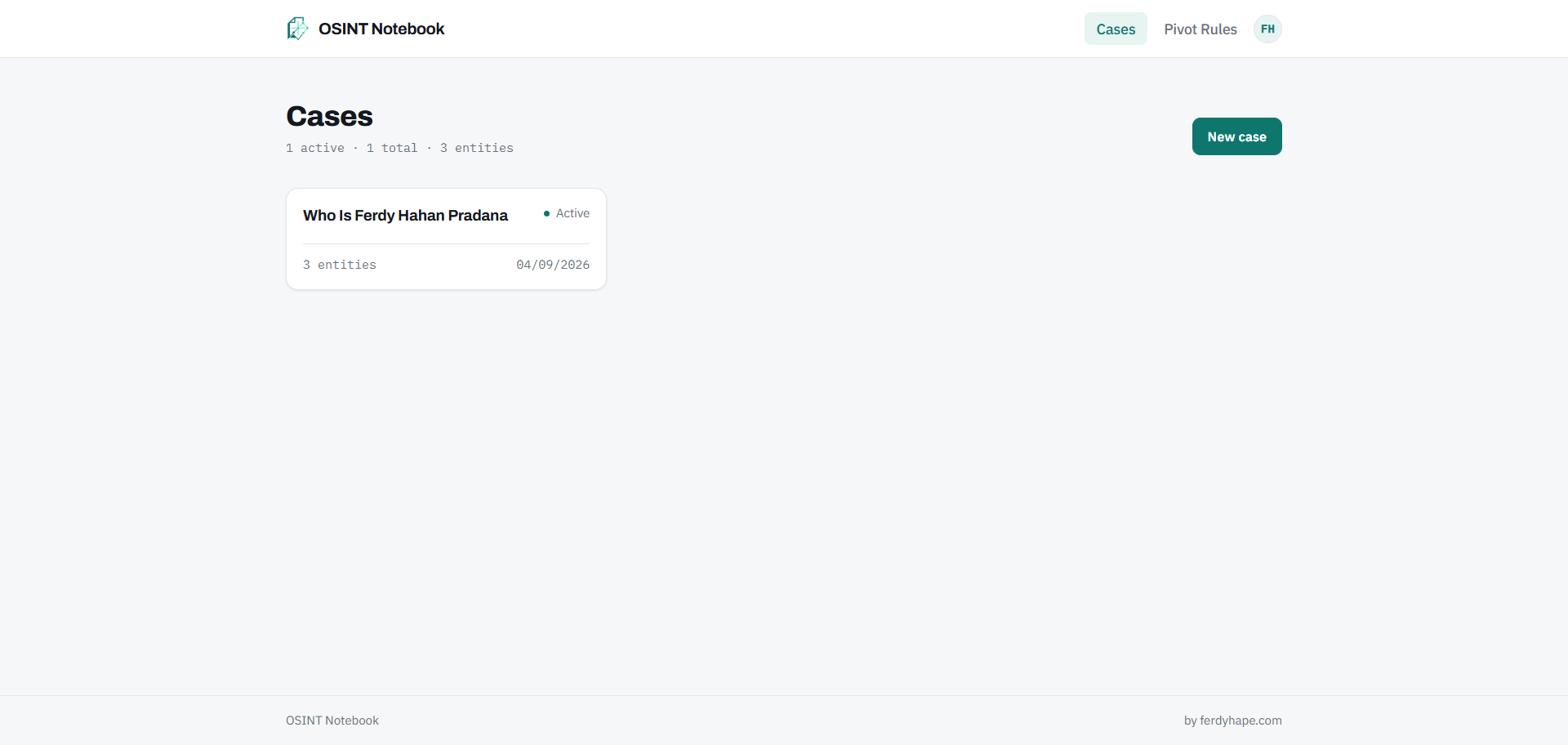
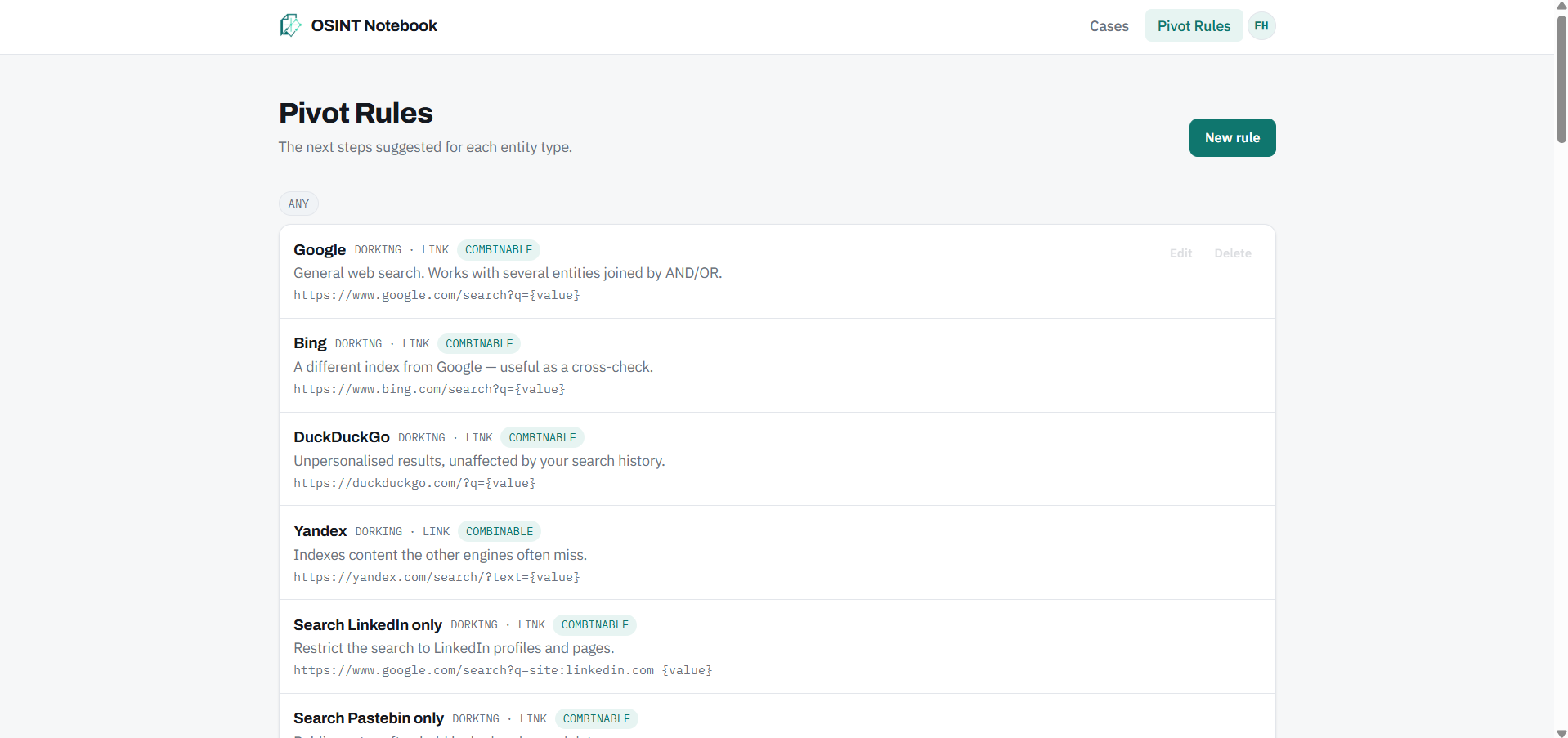
What actually changed for me is smaller than I expected. I don't work faster, I just stop losing the thread. Everything I find has somewhere to go, and the next move is already sitting there waiting, so I don't spend ten minutes remembering what I was in the middle of before I got distracted 🕵️.
Note: everyone who signs in shares the same cases, so the login is a gate rather than separate workspaces.
Tech Stack:
- Next.js (App Router) & TypeScript (UI and API in one app)
- Prisma & MySQL (cases, entities, notes, and the pivot rules themselves)
- Tailwind CSS (light and dark from one token set)
- bcrypt & jose (password hashing, signed session cookie in middleware)
Built With
 NextJS
 TailwindCSS
 Prisma
 Express JS